- English
- Español
- Português
- русский
- Français
- 日本語
- Deutsch
- tiếng Việt
- Italiano
- Nederlands
- ภาษาไทย
- Polski
- 한국어
- Svenska
- magyar
- Malay
- বাংলা ভাষার
- Dansk
- Suomi
- हिन्दी
- Pilipino
- Türkçe
- Gaeilge
- العربية
- Indonesia
- Norsk
- تمل
- český
- ελληνικά
- український
- Javanese
- فارسی
- தமிழ்
- తెలుగు
- नेपाली
- Burmese
- български
- ລາວ
- Latine
- Қазақша
- Euskal
- Azərbaycan
- Slovenský jazyk
- Македонски
- Lietuvos
- Eesti Keel
- Română
- Slovenski
- मराठी
- Srpski језик

カスタム ドローン バッテリー パック: メーカーから調達する場合に実際に購入するもの
We get about twenty quote requests a month that start the same way. Someone pastes a voltage, a capacity and a rough idea of what their drone weighs, and asks us to build a pack around it. Most end one of two ways: the price is double what their spreadsheet said, or they go back to a shelf battery and hope it holds up. Both are avoidable.
Custom drone battery packs are not a magic product. They are a set of engineering decisions made before the cells are ordered, and the price reflects those decisions more than the raw materials do. This guide is about how those decisions work in practice: what a manufacturer's quote actually pays for, when custom is worth the money, and how to tell a real custom build from a relabelled standard pack.
It is written for the people who actually buy and maintain these packs: integrators, fleet operators and OEMs who source batteries in volume, not for search engines. If you have been burned by a pack that looked right on paper and failed in the field, the sections below will save you money.
When Custom Makes Sense, And When It Doesn't
A shelf battery is the right answer more often than manufacturers like to admit. If your airframe has a standard form factor, your discharge stays inside the pack's rated curve, and you don't need the BMS to talk to your flight controller, buy the shelf pack and move on. We tell customers this all the time. A custom pack bought when a standard one would have worked is just a pricier way to get the same flight time.
Custom starts paying for itself in four situations. When the airframe has a dimension constraint no standard pack fits. When your duty cycle demands continuous discharge that standard packs derate on. When you need the battery to talk to the flight system, so the BMS must be tuned for your platform. And when you buy in volume and the design cost amortises across hundreds of packs.
There is also a less obvious reason to go custom, and it is the BMS. A standard pack's protection thresholds are set for a generic customer. If your drone pulls high current at the start of every climb-out, generic thresholds can trip early or trip late. A custom build lets us set overcurrent, undervoltage and balancing behaviour around your real flight envelope. This is where the smart BMS and custom pack arguments become one.
Custom also carries a one-time engineering cost. The design work, prototype cells, housing tooling and certification testing all happen once per design. Spread across fifty packs a year that cost is significant; spread across five thousand, it disappears. When a supplier quotes a custom pack at the same price as a shelf pack, either the design cost is already amortised into your volume, or no design work is happening at all. Worth asking which.
If none of those apply to you, a shelf pack is fine. Any supplier who pushes custom on every inquiry, without asking about your airframe first, is a salesman, not an engineer.
What A Custom Quote Actually Contains
When a drone battery supplier sends you a quote for a custom drone battery pack, the price is not one number. It is a stack of line items, and the cheapest quote is usually the one with several missing.
The cells are the biggest line item. The BMS is smaller, but the gap between a basic protection board and a smart BMS with communication is one reason quotes for the “same” pack vary by thirty percent. Pack assembly, housing, connector and wiring add another layer. Testing is a line item too, and it is the one buyers skip because they assume it is free and standard. It isn't.
Certification is the line item that separates a real quote from a fantasy. A custom pack needs its own UN38.3 test report, its own SDS document and, depending on how it ships, documented dangerous-goods classification. That work costs money and takes time. A quote that comes back suspiciously low usually has no testing and no certification in it, and you find that out when the forwarder rejects the shipment.
Payment terms deserve the same attention. A typical custom pack agreement runs on milestones: a deposit to start the design, a second payment when the prototype passes testing, and the balance at delivery. A supplier demanding full payment upfront for a product that does not exist yet is asking you to carry all the risk. Sort that out before you sign.
Ask for the breakdown in writing. A supplier who cannot itemise a quote cannot defend a price, and you will need it when the final invoice arrives. Ask about MOQ and lead time in the same message, because a quote without a delivery schedule is a wish, not a commitment.
The Five Numbers That Decide The Design
Before we touch a cell, we need five numbers from you. Everything else is negotiation.
Voltage and S count set the electrical baseline. A 6S pack sits at 22.2 V nominal and charges to 25.2 V; a 12S pack runs at 44.4 V and peaks at 50.4 V. Higher voltage means lower current for the same power, which means cooler ESCs and thinner wiring. Heavy-lift platforms tend to move from 6S to 12S or 14S as they scale up.
Capacity and watt-hours come next. Buyers compare mAh first and stop there. What matters is watt-hours, voltage times amp-hours, the real energy figure. A 6S 10,000 mAh pack and an 8S 7,500 mAh pack are different products with similar energy, and only the watt-hour comparison tells you that honestly. Doubling capacity rarely doubles flight time; the extra weight eats into the same thrust budget.
Continuous C-rate is the number most misread in this industry. A 25C rating on a 5,000 mAh pack promises 125 A continuous output, but only under the manufacturer's defined test temperature. At 45 °C ambient in summer, the real deliverable number drops. When you evaluate a drone battery supplier, ask for continuous-rate data tested at 45 °C, and ask how it was measured.
Internal resistance is rarely printed on anything, and it shows up as heat under load. Two packs with identical capacity can behave completely differently at 20 A draw if one has double the internal resistance of the other. For a high-discharge UAV battery, low internal resistance beats a few hundred extra mAh.
Operating temperature changes both chemistry and test data. In cold climates, Li-ion and semi-solid cells hold voltage better than high-rate LiPo, which stiffens when cold. In the tropics, high ambient temperature accelerates aging in every chemistry, so a pack rated at 25 °C lab conditions will not live out its rated cycles at 40 °C field conditions. Tell the supplier where the drone flies.
Form factor and connector close the list. The pack must fit the airframe bay and mate with your power distribution. This sounds trivial, and it kills more custom projects than any electrical parameter.
Send us those five numbers and we can tell you in one conversation whether a custom pack makes sense and roughly what it costs. That conversation is free, and most suppliers skip it.
| Spec | Real-world impact | Typical industrial UAV working range |
| Capacity (mAh) and watt-hours | Determines onboard energy while adding dead weight; compare by watt-hours, not mAh | 10,000 to 50,000 mAh |
| Voltage / S count | Drives motor behaviour and ESC heat generation | 6S (22.2 V) to 14S (51.8 V) |
| Continuous C-rate | Controls whether voltage holds steady under high-load climb | 10C to 25C (LiPo pouch cells), ask for 45 °C test data |
| Internal resistance | Converts to heat under load, limits sustained discharge | Below 2 mΩ per cell for high-draw packs |
What You're Paying For Inside A Custom BMS
A custom BMS is not a protection board with a longer name. It watches conditions inside the pack and talks to the flight system while doing it. When you pay for a smart BMS on a custom drone battery pack, here is what the money buys.
| Function | Real-world UAV significance |
| Overcharge protection | Avoids cell damage and lithium plating during abnormal charging |
| Over-discharge protection | Stops deep discharge that permanently shrinks pack capacity |
| Overcurrent / short-circuit protection | Restricts surge current during prop strike, motor blockage or wiring failure |
| Temperature monitoring | Disables charge or discharge when the pack runs too hot or too cold |
| Cell balancing | Keeps usable capacity close to rated value across the pack’s service life |
| State of charge reporting | Delivers reliable remaining-energy readings for pilots and flight controllers |
| Fault logging | Provides historical event data for maintenance and warranty decisions |
Cell balancing. Packs that are never balanced slowly drift, the weakest cell hits its limit first, and the whole pack stops early. Over a hundred cycles, the gap between a balanced and an unbalanced pack can be twenty percent of usable capacity. That is measured from packs back from the field, not a datasheet claim.
Protection speed. In a propeller strike or a motor lock-up, the BMS shuts down current in milliseconds. The alternative is the connector becoming a makeshift fuse, which ends the mission anyway. Custom tuning matches the thresholds to your platform's real current spikes, so protection trips when it should, not when a generic setting says so.
State-of-charge accuracy. The flight controller plans return-to-home and landing on reported remaining energy. A BMS that reports SOC over SMBus, CAN bus or UART, and reports it accurately, lets the aircraft come back with margin. A dumb pack leaves the pilot guessing, and guessing is how batteries come back empty.
Fault logging. When a pack returns after a hard landing, the log tells your team whether the battery protected itself, whether the pilot exceeded discharge limits, or whether the failure was mechanical rather than electrical. Without that record, every incident becomes an argument between pilot, maintenance and supplier.
Chemistry is part of the conversation too. LiPo pouch cells stay the default above 15C because they deliver current without voltage collapse. Li-ion cylindrical cells win on energy density and cycle life for low-discharge work. Semi-solid cells sit in between and are worth asking about for long-endurance projects. The BMS thresholds must match the chemistry you choose.
Every custom pack we ship goes through communication interface testing before delivery, because we have seen too many packs fail on the bench that a capacity check alone would have passed. SOC accuracy, fault response time and bus stability are checked before the pack is cleared.
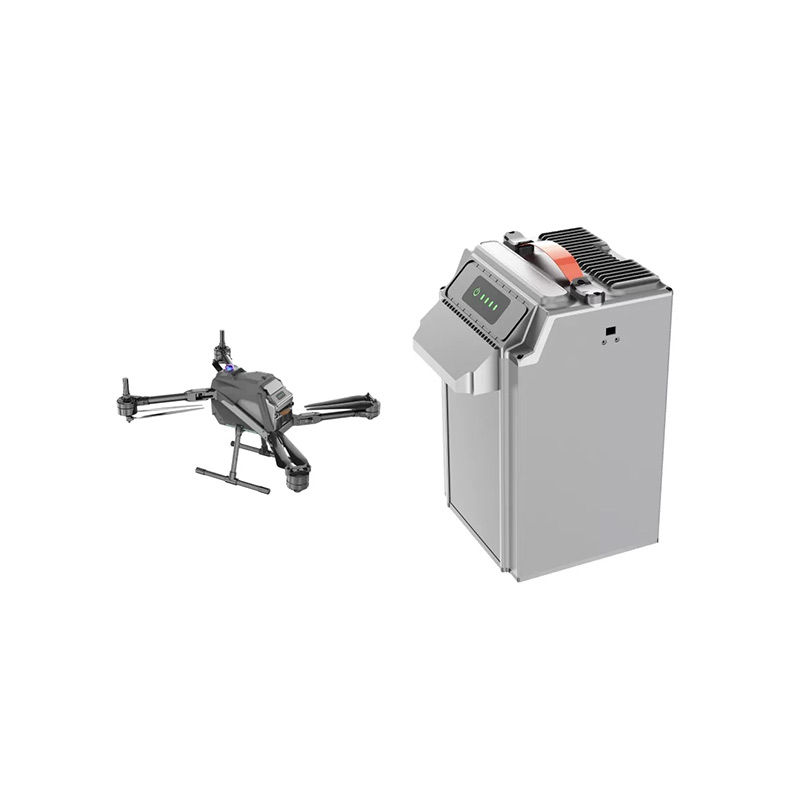
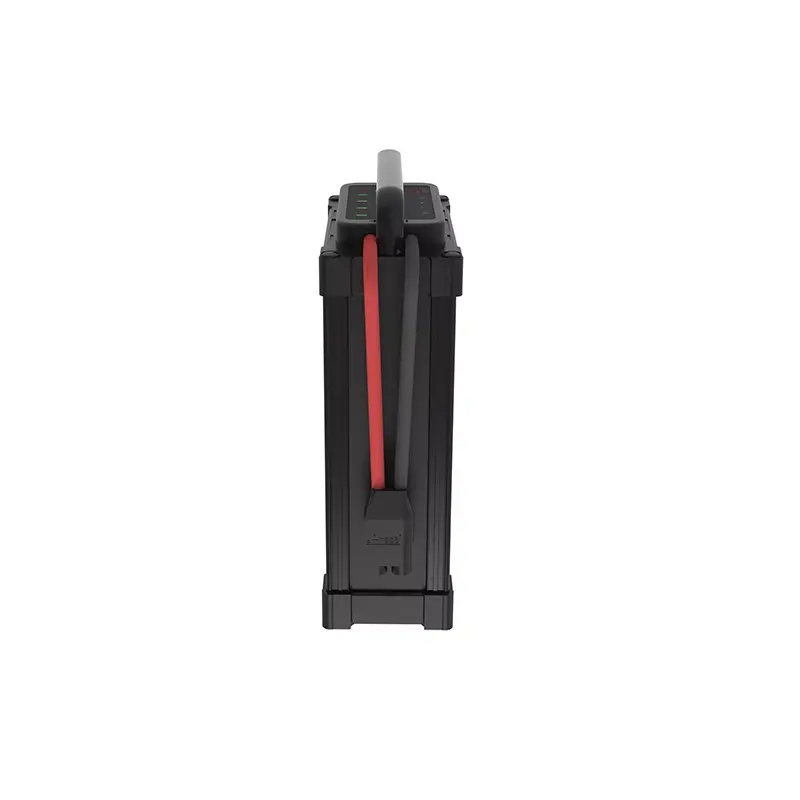
Custom drone battery pack with integrated smart BMS
Source Direct, Or Pay The Channel
Here is the part that procurement teams usually figure out after the first order, not before. A custom pack bought through a distributor or an overseas agent carries a markup you never see itemised, often twenty to thirty percent, and you still carry all the technical risk. Sourcing direct from the drone battery manufacturer removes the markup, but it puts more of the communication burden on you.
Direct sourcing works when you can define the pack technically and your contact answers engineering questions, not just takes an order. That is the model at YIHANG Power: customers send requirements, we review them as engineers, and the person who quotes you explains the quote. If a reseller cannot answer a question about C-rate or internal resistance, you are not getting a custom pack, you are getting a standard pack with a delivery fee.
The channel question also shows up in communication. Through a distributor, your questions travel to the factory and back, one email per round trip. Sourcing direct, the engineer who designed the pack answers you. For a custom industrial drone battery, where one wrong assumption about discharge or temperature can cost you a season, that difference beats the markup.
For OEM drone battery programs the same principle applies. If you plan to put your own brand on the packs, ask the manufacturer directly about white-label options, packaging and documentation. Some refuse, some charge for it, some include it. Ask in the first conversation; retrofitting branding after production starts is expensive.
A word on purchase orders: a real custom pack supplier discusses the design before you commit. If a supplier takes payment without asking about your airframe, flight profile or operating temperature, treat that as a warning. Custom means a conversation first, an order second.
Air Freight And Certification: The Part Nobody Budgets For
This is the section buyers skip and then regret. Every lithium battery shipped by air must pass UN38.3, the full test suite covering altitude simulation, thermal cycling, vibration, mechanical shock, short-circuit, impact, overcharge and forced discharge. A UN38.3 report from the cell maker is not automatically valid for your assembled pack; a custom pack needs its own testing unless the cells match the original certification scope.
Classification depends on how the battery ships. Standalone loose packs are UN3480; batteries installed in equipment or packed with the drone use UN3481. Get this wrong and the airline will reject the shipment at the counter, sometimes after the cargo is booked.
You will also need a valid SDS document, and most carriers require packs to ship at or below 30 percent state of charge on passenger aircraft. Some airlines tighten this further. Confirm the limit with the forwarder before you book.
Packaging is what first-time exporters get wrong even after certification. Lithium batteries need rigid outer packaging that passes the UN drop test, cells protected from short-circuit, terminal covers fitted and no loose metal in the box. Airlines inspect this far more strictly than five years ago, and a package that survives a normal courier trip will not automatically survive a dangerous-goods inspection.
The rules sit under the IATA Dangerous Goods Regulations and change every year. If your export volume justifies it, have the documentation prepared by a specialist; a single missing certificate can hold a shipment for days and cost more than the certification itself.
The practical point for sourcing: ask for the UN38.3 report and the SDS before you place the order, not at delivery. A custom UAV battery without these documents is not shippable by air, no matter how good it performs on the bench. A supplier surprised by this question is not the one you want building your packs.
How To Vet A Drone Battery Manufacturer
Most companies that call themselves drone battery manufacturers are actually assemblers. They buy cells, buy a BMS, screw the pack together and label it. Some do this well. The problem is telling them apart before you send money, so here is what we tell every customer who asks.
Ask for production-sample test data, not lab-unit data. Lab units are hand-built and hand-tuned; production samples come off the same line your order will run on. Ask how the supplier defines capacity tolerance, and whether rated capacity is guaranteed at first cycle or after fifty cycles. If they cannot answer in writing, they are usually quoting a hobby product at industrial prices.
Ask what happens after a field failure. The real test of a drone battery manufacturer is not the sales call, it is the failure investigation. Will they take the pack back, read the fault log and tell you what actually happened? Or will they blame the pilot, the charger and the weather?
Check MOQ and lead time against your own procurement schedule. Custom packs cannot be pulled from a shelf, and lead times vary with cell availability and testing requirements. A written schedule is part of a real quote. If they claim ISO 9001, ask to see the scope; refusing a factory visit is itself an answer.
And check where the cells come from. Cell brand, cell grade and the supplier's relationship with the cell maker matter more than the pack brand. If the pack manufacturer cannot name the cell source, they don't control their own supply chain, and neither will you.
How YIHANG Develops Custom Drone Battery Solutions
We start from the aircraft, not from the cell. A custom industrial drone battery pack is designed around your real flight envelope, not assembled from whatever cells are in stock this month.
Our engineering workflow runs in a fixed order: peak discharge demand analysis, cell chemistry matching, mechanical pack layout, connector selection, BMS protection threshold tuning, then capacity verification and full loaded discharge testing before anything ships.
Peak current analysis comes first because it defines everything downstream. A mapping drone cruising at low current has a different requirement than a crop-spraying UAV pulling high current during spray runs.
For flight time as the priority, our long-endurance drone battery line delivers 20 to 40 percent longer flight duration than standard packs of identical rated capacity, measured on the same airframe in the same conditions.
For projects with custom voltage, capacity or physical dimension envelopes, share your requirements through our inquiry page. Our engineering team reviews the parameters and proposes suitable lithium battery configurations for your UAV platform.
Typical custom projects range from single-pack prototyping for a new airframe to production runs for established fleets. You get a written schedule with the quote and a test report for every pack. That paperwork is what your quality department and your end customer will ask for.
If you are sourcing custom industrial drone battery packs with an integrated smart BMS for inspection, agriculture or cargo missions, reach out to YIHANG Power. We run peak-current simulation and loaded discharge validation for your real flight conditions, and we have done it for customers on five continents.
Send over your voltage, capacity and dimension requirements today. The first technical discussion costs nothing, and it will tell you more about your battery options than a week of datasheet reading.